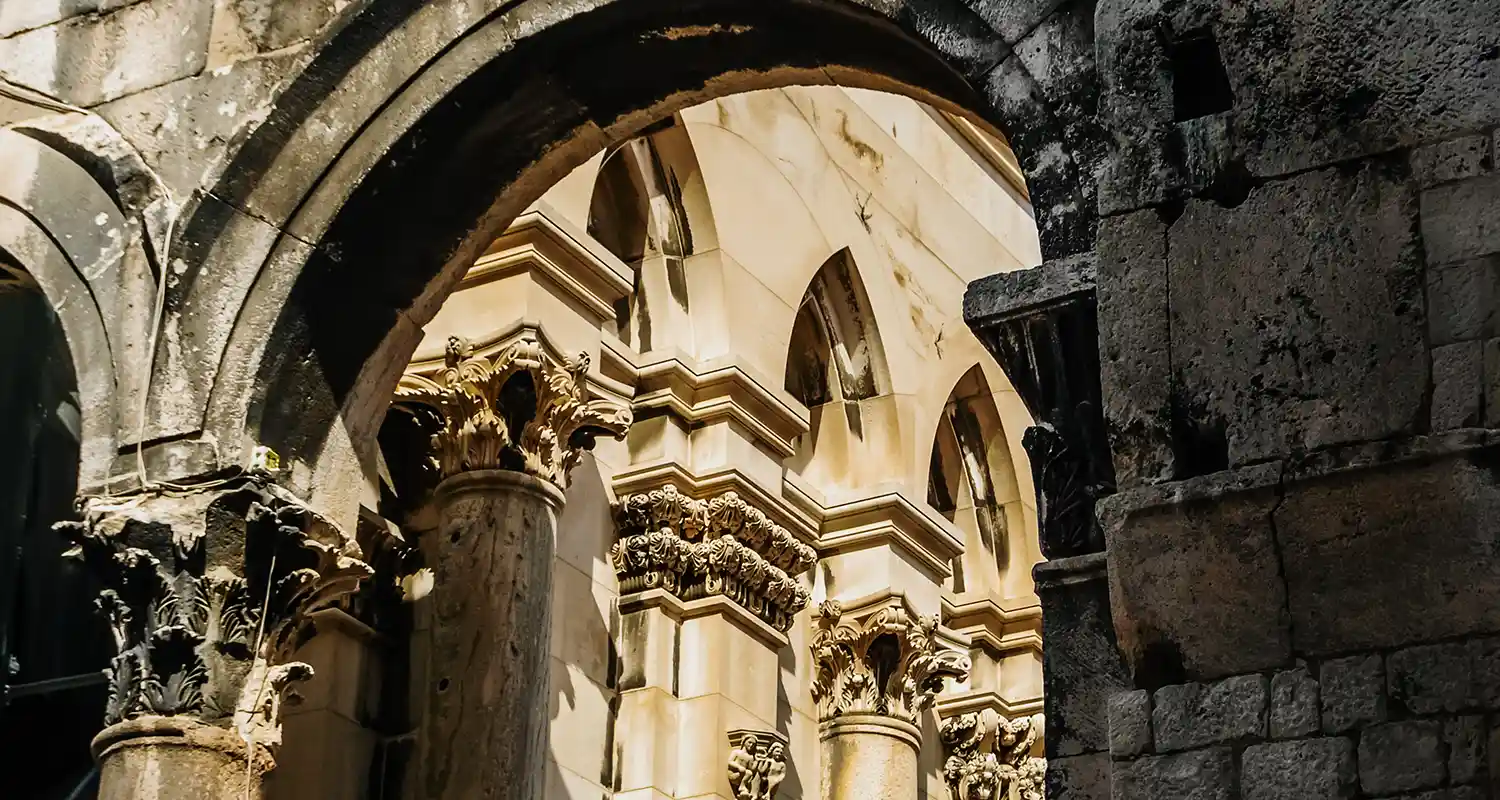
Nestled in the heart of the Dalmatian coast, the ancient city of Split, Croatia, is home to one of the most remarkable and best-preserved Roman monuments in the world: Diocletian’s Palace. Built over 1,700 years ago, this massive structure is not just a relic of the past—it’s a vibrant part of everyday life in Split, seamlessly blending ancient history with modern culture.
A Palace Built for an Emperor
Diocletian’s Palace was constructed at the turn of the 4th century AD as a retirement residence for Roman Emperor Diocletian, who is best known for voluntarily abdicating the throne—a rare move in Roman history. Born in nearby Salona (modern-day Solin), Diocletian chose this coastal location for its beauty, strategic position, and proximity to his birthplace.
The palace was built using high-quality limestone from Brač Island, marble from Italy and Greece, and even Egyptian granite and sphinxes—evidence of the empire’s vast reach. Although called a “palace,” it was designed as a fortified complex, combining the luxuries of an imperial villa with the defensive elements of a Roman military camp (castrum).
Layout and Architecture
The palace covers approximately 30,000 square meters and was originally surrounded by massive stone walls with towers and four gates: the Golden Gate (north), Silver Gate (east), Iron Gate (west), and Bronze Gate (south, leading to the sea).
Inside, the palace was divided into two halves:
- The southern half housed Diocletian’s private quarters, including a grand peristyle (courtyard), temples, and the emperor’s mausoleum (which is now Split’s Cathedral of Saint Domnius).
- The northern half was used for military barracks and servants.
The architecture is a masterful blend of Roman, Greek, and Egyptian influences—grand columns, domes, arches, and decorative details that have survived the test of time.
From Imperial Palace to Living City
After Diocletian’s death, the palace remained in use and gradually transformed over the centuries. In the 7th century, local residents fled to the palace for refuge from invading tribes. Instead of abandoning the structure, they built homes, shops, and churches within its walls, turning the former imperial residence into a bustling medieval town.
Today, Diocletian’s Palace is not a museum frozen in time—it’s a living, breathing part of Split. More than 3,000 people live within the palace’s walls, and its narrow streets are filled with cafés, restaurants, boutiques, and galleries. Visitors can stroll through ancient passageways, enjoy a coffee in the Peristyle, or climb the bell tower of the cathedral for panoramic views of the Adriatic Sea.
UNESCO World Heritage Site
In 1979, Diocletian’s Palace and the historic center of Split were designated a UNESCO World Heritage Site, recognizing the exceptional preservation of Roman architecture and the site’s continuous use for over 17 centuries.
Visiting tips
- Best time to visit: Spring and early autumn offer pleasant weather and fewer crowds.
- Don’t miss: The Cathedral of Saint Domnius, the Temple of Jupiter, and the underground cellars.
- Fun fact: Several scenes from HBO’s Game of Thrones were filmed inside the palace.
Conclusion
Diocletian’s Palace is more than just ancient stone and history—it is a unique fusion of old and new, where life thrives amidst Roman ruins. A visit to this architectural marvel is not only a journey back in time but also a celebration of cultural resilience and continuity.