
Who Was Grgur Ninski?
Grgur Ninski was a 10th-century Croatian bishop, most likely born in the region of Dalmatia. He served as the Bishop of Nin, a town near Zadar that was a significant religious and political center in early medieval Croatia.
Grgur is best known for his opposition to the powerful Roman Catholic Church in a time when Latin was the only officially accepted language of worship. In a bold and controversial move, he advocated for the use of the Croatian language and Glagolitic script in religious services—an act that was seen as revolutionary at the time.
Defender of the Croatian Language
At a time when most of the population could not understand Latin, Grgur Ninski’s insistence on using the Slavic vernacular helped bring Christianity closer to the common people. This move not only increased religious participation but also helped preserve the Croatian language and identity during centuries of foreign influence.
Grgur’s resistance to Latin liturgy was met with strong opposition from the Pope and other church leaders, who saw his actions as heretical. Eventually, under pressure, his influence was diminished, and the Bishopric of Nin was abolished in favor of the more Roman-aligned Archbishopric of Split.
Despite this setback, Grgur Ninski remained a powerful symbol of national unity and cultural independence in Croatian history.
The Iconic Statue
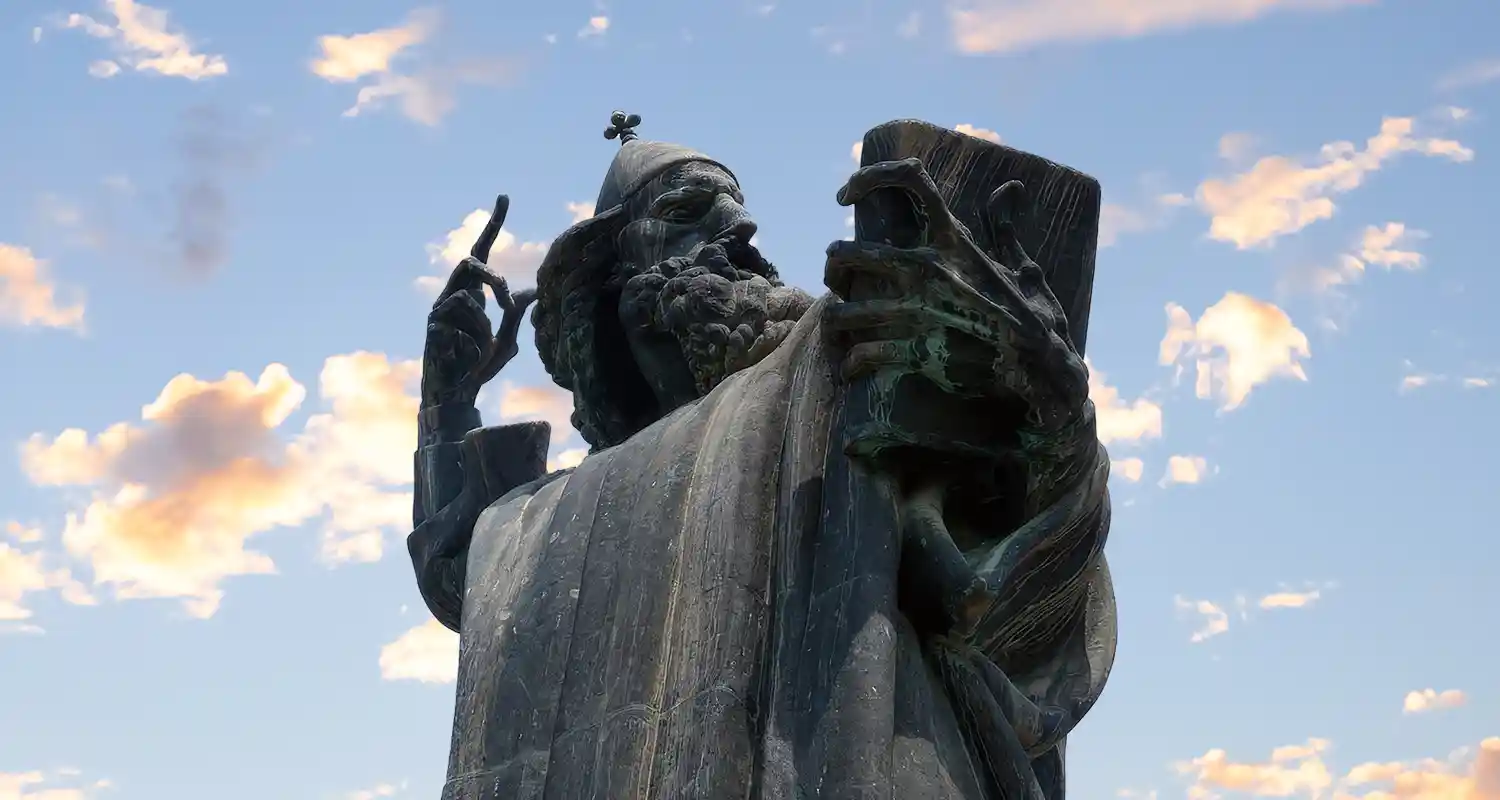
The larger-than-life statue of Grgur Ninski was created in 1929 by the renowned Croatian sculptor Ivan Meštrović. Originally placed in front of Diocletian’s Palace, the statue was moved several times before finding its current home just outside the palace walls near the northern Golden Gate.
Towering at over 8 meters (26 feet) tall, the statue depicts the bishop holding a large Bible and raising his finger as if delivering a powerful sermon or a defiant warning. Over time, a local legend has grown around the statue: rubbing the toe of Grgur Ninski’s left foot is said to bring good luck. As a result, the toe has become shiny and worn from thousands of visitors’ hands over the years.
Legacy
Grgur Ninski is remembered as:
- A defender of national identity and religious reform.
- A symbol of resistance against foreign domination—both spiritual and political.
- A cultural icon whose name and legacy live on in Croatian schools, streets, and literature.
His push for the use of the Glagolitic script in liturgy not only preserved a unique Slavic alphabet but also laid the groundwork for a strong Croatian literary and cultural tradition that continues to this day.
Conclusion
Grgur Ninski may have lost the battle against the Roman Church, but he won a lasting place in the hearts of the Croatian people. His fight for language, faith, and identity resonates even today, and his towering statue in Split stands as a timeless reminder of one man’s courage to speak for his people.


